The Art of the Boot

Fashion · culture · history

The art
of the boot

From protection against mud and cold to one of fashion’s most powerful silhouettes. The boot tells us how people lived, travelled and worked — and how women made themselves visible.

Fashion designer Mary Quant in a minidress and tall boots at Schiphol Airport in 1966
Mary Quant at Schiphol Airport, 1966 · Photo: Jack de Nijs / Anefo
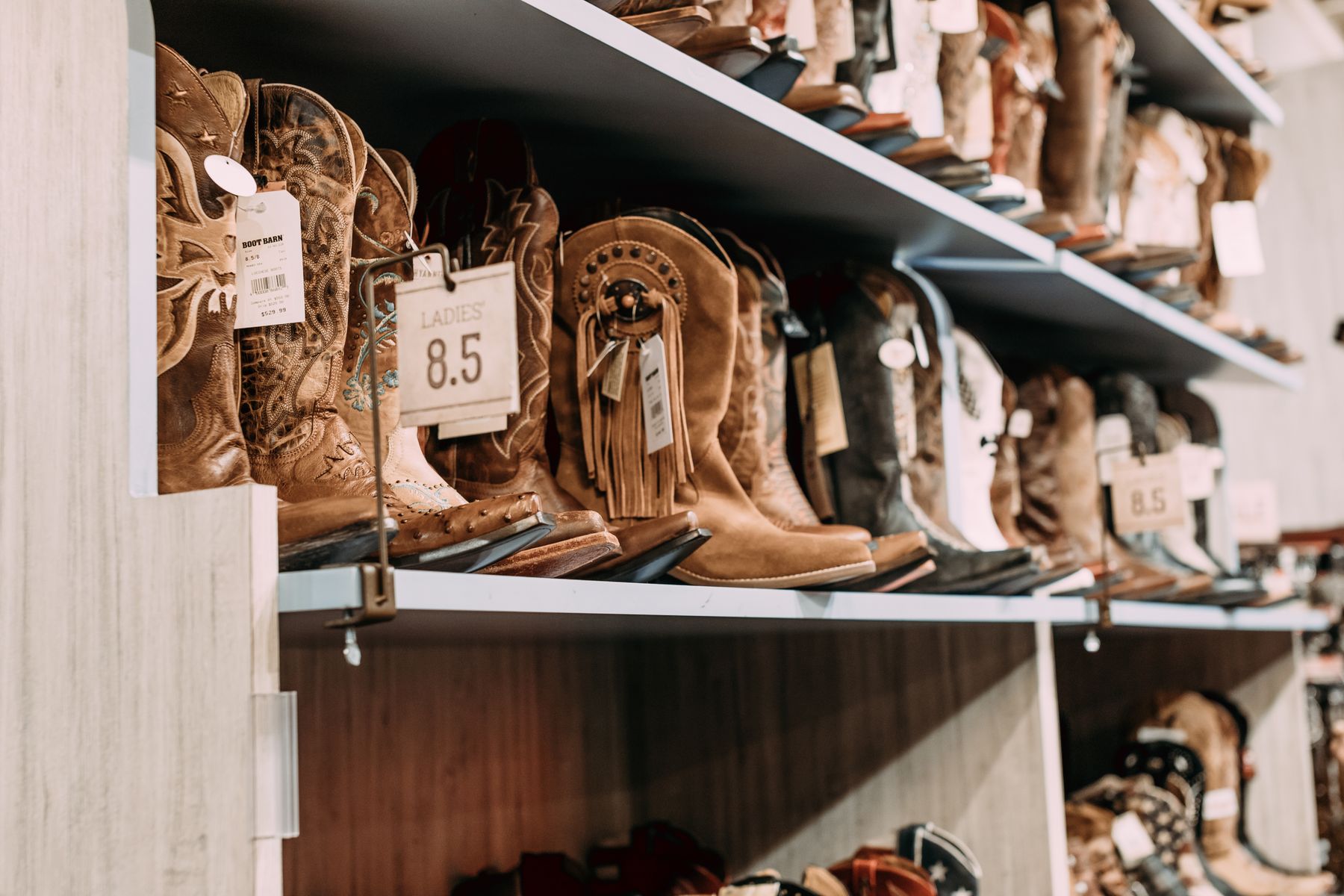
Rows of cowboy boots in warm shades of brown on shop shelves
Cowboy boots in warm shades of brown · Rachel Claire / Pexels

Preview · autumn and winter 2026–2027

From tall to relaxed

Tall shafts, supple suede, refined western shapes and warm cognac. These are the boots set to define the streets in the new season.

Explore the new trends

New · visual guide

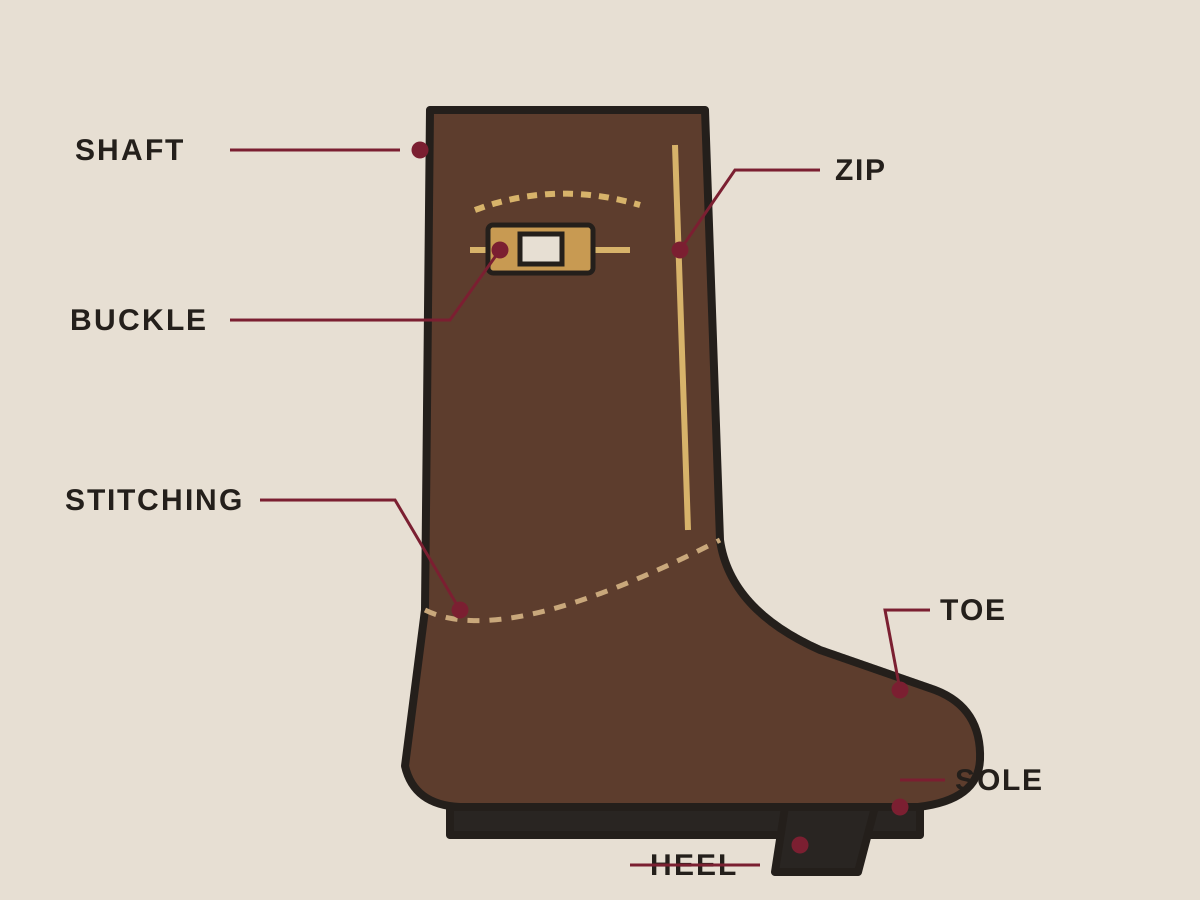
The anatomy of a boot

How do the shaft, toe, heel, sole, zip, buckle and stitching shape a boot? Take it apart, element by element.

Explore the anatomy →
Illustration showing the anatomy of a tall boot

More than a shoe with a tall shaft

The first boots were not fashion items. They emerged wherever an ordinary shoe fell short: on cold plains, muddy roads and in the saddle. The shaft protected the ankle and lower leg, while leather kept out wind, water, thorns and dirt.

Yet this practical form soon became a mark of status. Expensive leather, fine stitching and a tall shaft suggested that its wearer possessed money, power or a horse. For centuries boots therefore belonged mainly to soldiers, hunters, couriers and riders. Only from the late eighteenth century did they become an increasingly prominent part of women’s fashion.

Historic encyclopaedia plate showing shoes, sandals and boots from different periods
A world of shapesHistoric footwear, from the Roman caliga to riding boots and button boots · Larousse, 1932

From necessity to desire

Seven eras,
one recognisable line

01Antiquitybefore 500
02Rider & traveller500–1750
03Fashion appears1750–1850
04Into the city1850–1914
05Modern life1914–1960
06Fashion breaks free1960–1980
07Anything goes1980–today
01

Antiquity · before 500

Warmth, protection and standing

Nomadic peoples in the colder parts of Europe and Asia made enclosing footwear and boots from leather, felt and hide. Tall forms were also known in the ancient world. Greek actors wore the cothurnus; Roman soldiers relied on sturdy footwear for support and protection on long marches. The exact form varied with climate, occupation and rank, but the principle was already there: the foot and part of the leg became one protected whole.

The boot began where the road ended.
Pair of black Hessian boots dating from around 1820
Hessian boots, England, circa 1820 · LACMA, public domain
02–03

500–1850 · Rider, traveller and rebel

From the saddle to the salon

In medieval and early modern Europe, boots remained closely associated with travel, hunting and warfare. Long leather riding boots protected the leg from the saddle and undergrowth. In the seventeenth century, wide-topped cavalry boots formed part of the imposing appearance of officers and noblemen.

Around 1800, slimmer designs appeared, including the Hessian boot, recognisable by its curved top and occasional tassel. Such styles moved from military to civilian wardrobes. Boots became fashionable for women during the final quarter of the eighteenth century, initially above all for riding and travel. A development had begun that would never truly stop.

Light-coloured fabric women’s boot with laces from the early nineteenth century
Women’s boot, early nineteenth century · Museo Rossimoda / CC BY-SA 3.0
04

1850–1914 · Into the city

A respectable ankle

The nineteenth century made boots both more commonplace and more refined. Industrialisation accelerated production. The sewing machine and new ways of joining sole and upper brought reliable, uniform footwear within reach of a wider public.

For women, the ankle boot became a natural part of outdoor dress. Laces, elastic side panels or rows of tiny buttons fastened closely around ankle and calf. Long skirts concealed much of the boot, yet movement revealed a carefully chosen detail: silk, contrasting leather, a graceful heel or a scalloped edge. The boot was practical without surrendering its elegance.

05

1914–1960 · A more modern life

Work, weather and changing hemlines

Two world wars, mass production and new materials transformed footwear. Rubber wellingtons and sturdy work boots earned a permanent place, while women’s fashion often favoured lower shoes. Yet boots never disappeared. Riding boots retained an aristocratic ideal, motorcycle boots belonged to speed and freedom, and functional military and industrial designs slowly found their way into street and youth culture.

The boot was waiting for the hemline to rise.

06

1960–1980 · Fashion breaks free

White leather,
short skirts,
a new stride

In the 1960s, the boot became the emblem of young, optimistic fashion. André Courrèges presented his futuristic Space Age collection in 1964. The white low boot worn with his crisp geometric clothes was widely copied. Together with the miniskirt, it made the entire leg part of the silhouette.

The popular go-go boot appeared in white, patent, vinyl and vivid colours, usually with a low block heel. It looked modern and offered more freedom of movement than a delicate pump. During the 1970s shafts grew taller and heels heavier. Platform soles, suede and cowboy boots brought disco, bohemian and western influences together.

Racks of colourful women’s cowboy boots in a boot shop
Women’s cowboy boots, New Mexico · Pete Unseth / CC BY-SA 3.0
07

1980–today · Anything goes

Not a trend but a language

Since the 1980s there has no longer been one dominant boot. The over-the-knee boot can suggest glamour, the Dr. Martens boot rebellion, the cowboy boot nostalgia and the wellington plain utility. Designers draw on the military, equestrian sport, pop music and street culture, placing familiar shapes in new contexts.

Today the boot is a complete visual language. Material, heel, toe, shaft height and finish can express an attitude before the wearer says a word. At the same time, attention is returning to craftsmanship: repairable constructions, responsibly sourced leather, recycled materials and designs intended to outlast a single season.

Anatomy of an icon

Seven shapes that keep returning

Fashion changes, but a small group of fundamental designs remains recognisable.

The shape is centuries old.

The meaning
changes with
every step.

Credits

Sources & image rights

This page draws on museum collections and verifiably free-licensed images. The images remain the property of their creators or collection holders and are reproduced under the licences listed below.

View image credits
View editorial sources