Form · construction · detail
The anatomy
of a boot
A visual breakdown of seven elements that together give a boot its character.
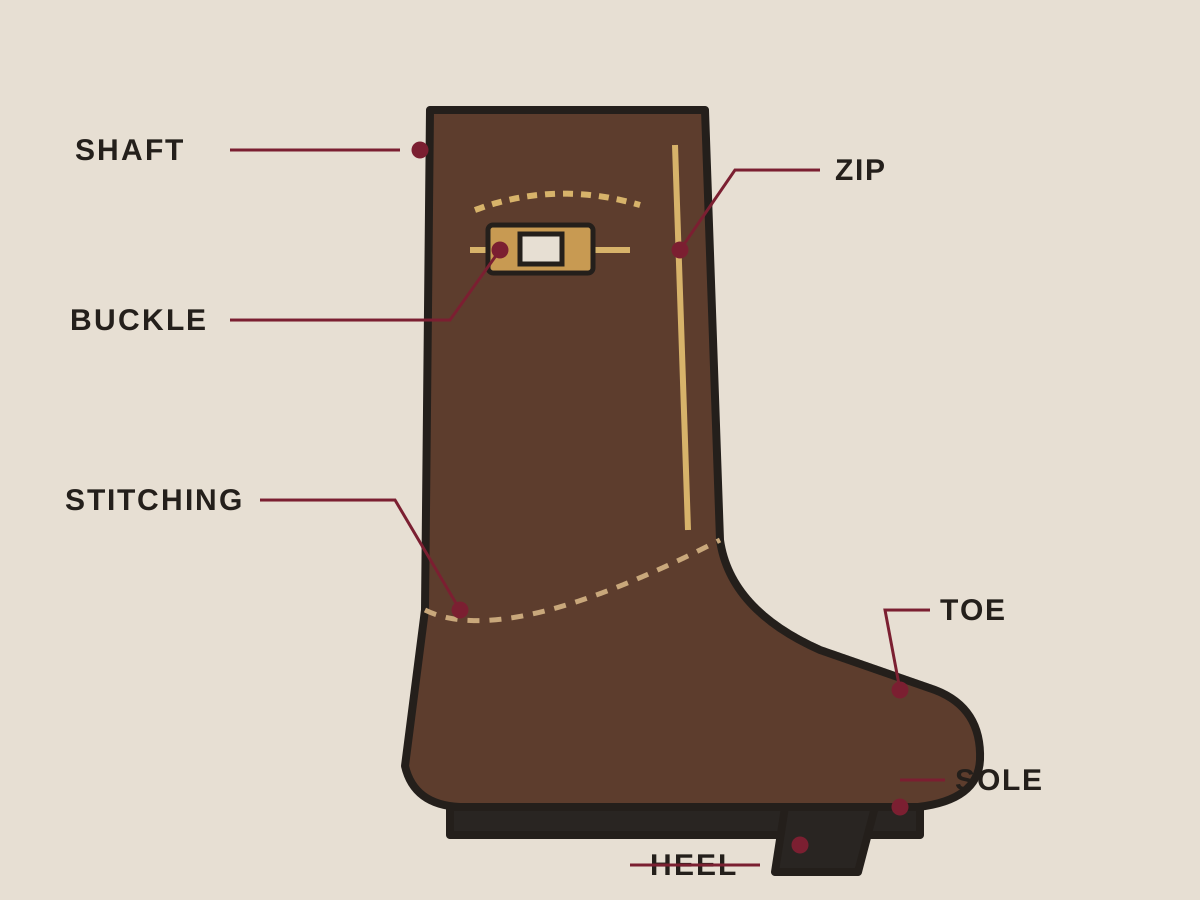
A boot seems simple: a shoe with a high shaft. Yet a few extra centimetres, a different heel or a sharper toe can completely alter its character.
From rugged biker boot to elegant knee-high, and from cowboy boot to practical wellington, almost every boot is built from the same basic elements.
Look at those elements separately and you begin to recognise the language of the boot.
The shaft
The silhouette
The shaft rises from the foot along the ankle, calf or leg and is what turns a shoe into a boot. Height, width and stiffness shape the silhouette. A close knee-high shaft looks sleek; a loose, slouching one feels more relaxed.
Tall and close-fitting lengthens · short and wide feels sturdierThe toe
Where the eye begins
Round, almond, square or pointed: the toe changes the proportions of the entire boot. A round toe softens, a pointed toe extends the line of the foot, while a square toe adds visual weight.
Round softens · pointed lengthens · square adds strengthThe heel
Posture and character
A flat sole makes a boot practical and stable. A block heel adds height while retaining solidity. A high, narrow heel changes both the look of the boot and the wearer's posture. The angled western heel has an identity all its own.
Wide and low is rugged · high and narrow refinesThe sole
The foundation
A thin sole can almost disappear into the design; a heavy lug sole announces itself. Beyond grip, cushioning and protection, the sole has become a major styling element.
Thin keeps the line light · tread adds weightThe zip
Technology that can be seen
The zip makes tall or close-fitting boots easier to put on. Placed on the inside, it can almost disappear. A chunky metal zip on the outside becomes decoration and adds a more industrial accent.
Hidden is functional · visible becomes designThe buckle
From fastening to ornament
A buckle can adjust fit, but on modern boots it is just as often there for appearance. Biker, motorcycle and western boots use straps and metal to break up broad areas of leather.
Small is an accent · large or multiple buckles dominateThe stitching
Lines drawn in leather
Stitching joins pieces together and draws lines across the boot. A vertical seam can make a shaft appear longer; contrasting thread reveals the construction. On cowboy boots, decorative stitching becomes an identity in itself.
Ton-sur-ton lets form speak · contrast reveals constructionOne boot, thousands of combinations
Together, the parts tell the story.
Take a black leather knee-high. Give it a high narrow heel, pointed toe, thin sole and almost invisible zip, and the result is elegant and streamlined.
Keep the same leather and shaft height but choose a round toe, heavy lug sole, low block heel and two metal buckles. It immediately becomes a much more rugged boot.
That is much of the appeal of the boot as a fashion object: within one instantly recognisable form, almost endless variation is possible.